2027 Safety Training Plan: What Changes in Canadian OHS Law, and Which Courses Fit

On January 1, 2027, new elevating work platform rules take effect on Ontario construction projects. Three days later, British Columbia's combustible dust sections arrive, and more dates follow into the fall.
If you plan training as a safety coordinator, HR lead or supervisor, start with one question: which of these 2027 OHS changes in Canada reach your workplace? Dates here are current as of November 27, 2026.
Read this before you book anything
Every course linked here is awareness-level. Awareness training introduces a hazard. It is not a practical evaluation, a government-recognized certificate, a TDG certificate, a respirator fit test or an equipment certification, and it does not make an employer compliant. Don't assume any course covers the new 2027 text. This article is general information, not legal advice.
Which of these 2027 OHS changes reach your workplace?
Which 2027 OHS dates apply to you?
Find your jurisdiction, then work backward from the date. If you aren't sure whether your operation is provincially or federally regulated, settle that first with our guide to which safety regulator covers your workplace.
- Already passed: Quebec level 4 training attestations, due before October 1, 2026
- January 1: Ontario construction, elevating work platforms
- January 4: British Columbia, combustible dust
- January: new Canadian Electrical Code edition released
- January 30: federally regulated workplaces, thermal stress and exposure rules
- March 1: British Columbia, automotive lifts
- April 1: Quebec level 3 training attestations due before this date; Manitoba construction washbasins
- June 1: Manitoba asbestos worker certificates
- About June 16 and June 30: end of two federal TDG transition periods
- July 1: Ontario construction head protection
- July 31: WSIB construction AED reimbursement requests due
- September 1: British Columbia periodic equipment certification
- October 1: Quebec level 2 training attestations due before this date
What has to be ready in January 2027?
Four items land in the first month. The first two give you the least time, since December shrinks fast once holidays and shutdowns come out of it. If we had to pick one job to start Monday, it would be pulling platform training records, because you can't book what's missing until you know who is missing it.
Ontario construction: elevating work platform training (January 1)
From January 1, O. Reg. 117/26 applies to elevating work platforms on all construction projects, and O. Reg. 116/26 revokes sections 143 to 149 of O. Reg. 213/91.
- Theory and practical training, plus a demonstration of proficiency, for each group and type of platform (sections 9 and 10), valid for five years
- Familiarization with the specific make and model (section 11)
- Training records (section 12)
Training already completed under the old section 147 still counts for the same group and type, until five years after the date it was completed. Mast climbers and vehicle-mounted aerial devices are treated differently: section 13 calls for oral and written instruction plus training on that group and type, including a hands-on demonstration of the controls.
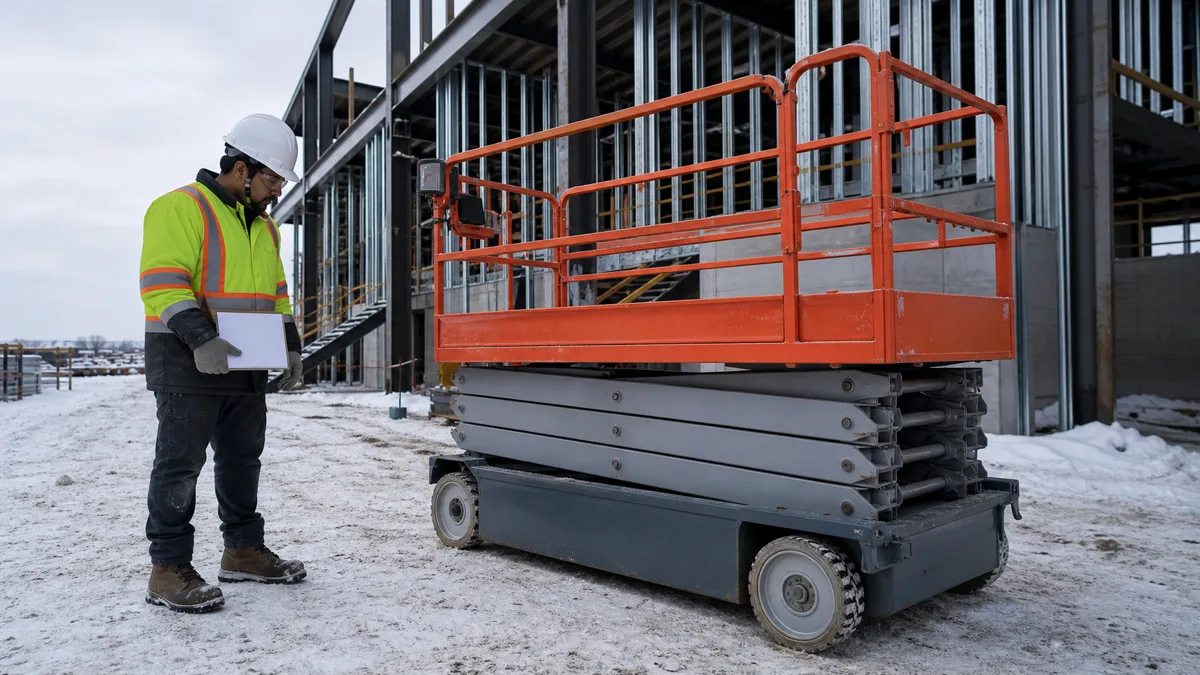
Our scissor lift and boom lift awareness course is background reading in online form. It does not meet this requirement. There is no practical training in it and no proficiency demonstration.
Still closing out the previous round? We summarized the January 2026 OHSA changes separately.
British Columbia: combustible dust (January 4)
Sections 6.133 to 6.159 of the OHS Regulation take effect, and the duties build in tiers under section 6.135. For an employer that generates or handles dust, the first question is whether that dust is combustible. The regulation presumes the dust is combustible unless you determine otherwise in writing, with a qualified person, using screening-test results or published test data (sections 6.137 to 6.139). If it is combustible, a written risk assessment follows. A management program, with instruction and training under section 6.143, is required only if that assessment finds a combustion hazard.
Section 6.134 exempts workplaces with no reasonably foreseeable combustion risk, and dust in sealed commercial packages. Parts 4, 5 and 31 change at the same time. The WorkSafeBC board decision has the full wording.
A combustible dust awareness course can give crews the basics. It is not your risk assessment, and it is not the instruction your own program has to deliver.

For an employer that generates or handles dust, the first question is whether that dust is combustible.
Federally regulated workplaces: thermal stress and more (January 30)
This one applies only to federally regulated workplaces. Under section 77(1) of SOR/2026-10, the date is the first anniversary of its January 30, 2026 registration.
- Thermal stress procedures, including training, developed in consultation with the policy committee or, if there is none, the workplace committee or representative
- Exposure kept as low as feasible for chemicals with no ACGIH value (grain dust, flour dust and asbestos are excepted)
- A nanomaterials program under CSA Z12885 where engineered nanomaterials are present
- Radon at or below an annual average of 200 Bq/m3, except for nuclear energy workers
- Non-solar ultraviolet radiation from 180 to 400 nm held within ACGIH threshold limit values
- Hazardous substance and sampling records kept for 30 years
Parallel changes appear in the marine, aviation, on-board train and oil and gas regulations, so check the one that governs your operation.
We offer heat stress awareness, cold stress awareness and indoor air quality awareness. All three are general courses. None covers the new federal text, and your site procedures still have to be written.
Electrical work: a new Canadian Electrical Code edition (January)
CSA lists the 27th edition of the Canadian Electrical Code, Part I (CSA C22.1:27) for release in January 2027 on its preorder page. A release date doesn't put it into force where you are. Provinces adopt the code separately, so confirm which edition is in force where you work before changing procedures.
For non-specialists who work around power, electrical safety awareness covers general hazards. It is not training on the new edition.
Online courses that pair with the January changes
Use these awareness courses for shared vocabulary. None meets a 2027 requirement on its own, so add the practical, site-specific and certified pieces your jurisdiction requires.
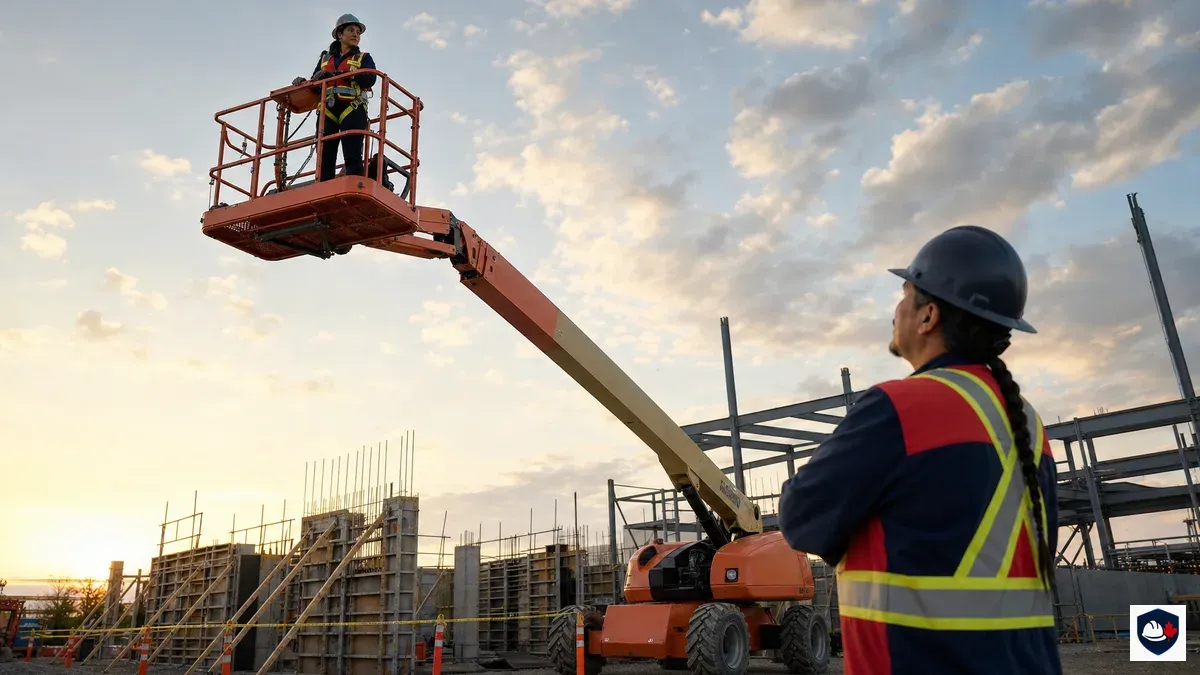 Scissor Lift & Boom Lift Safety AwarenessBackground for Ontario platform work, January 1$34.95
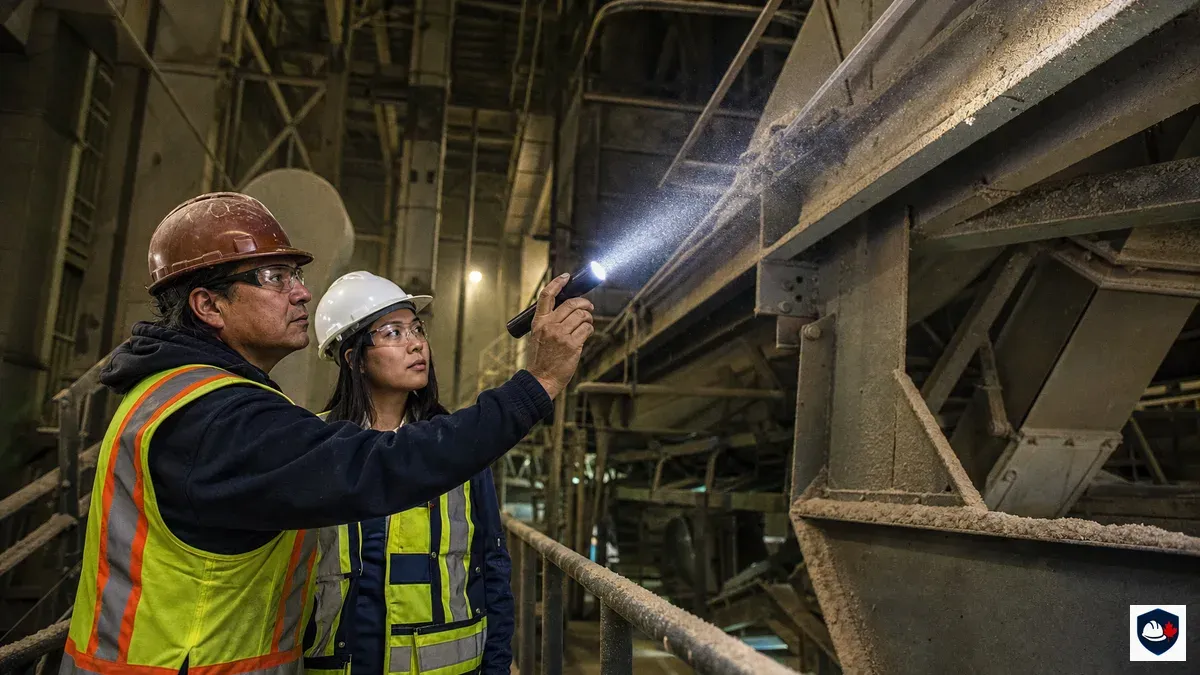 Combustible Dust AwarenessBritish Columbia dust rules, January 4$24.99
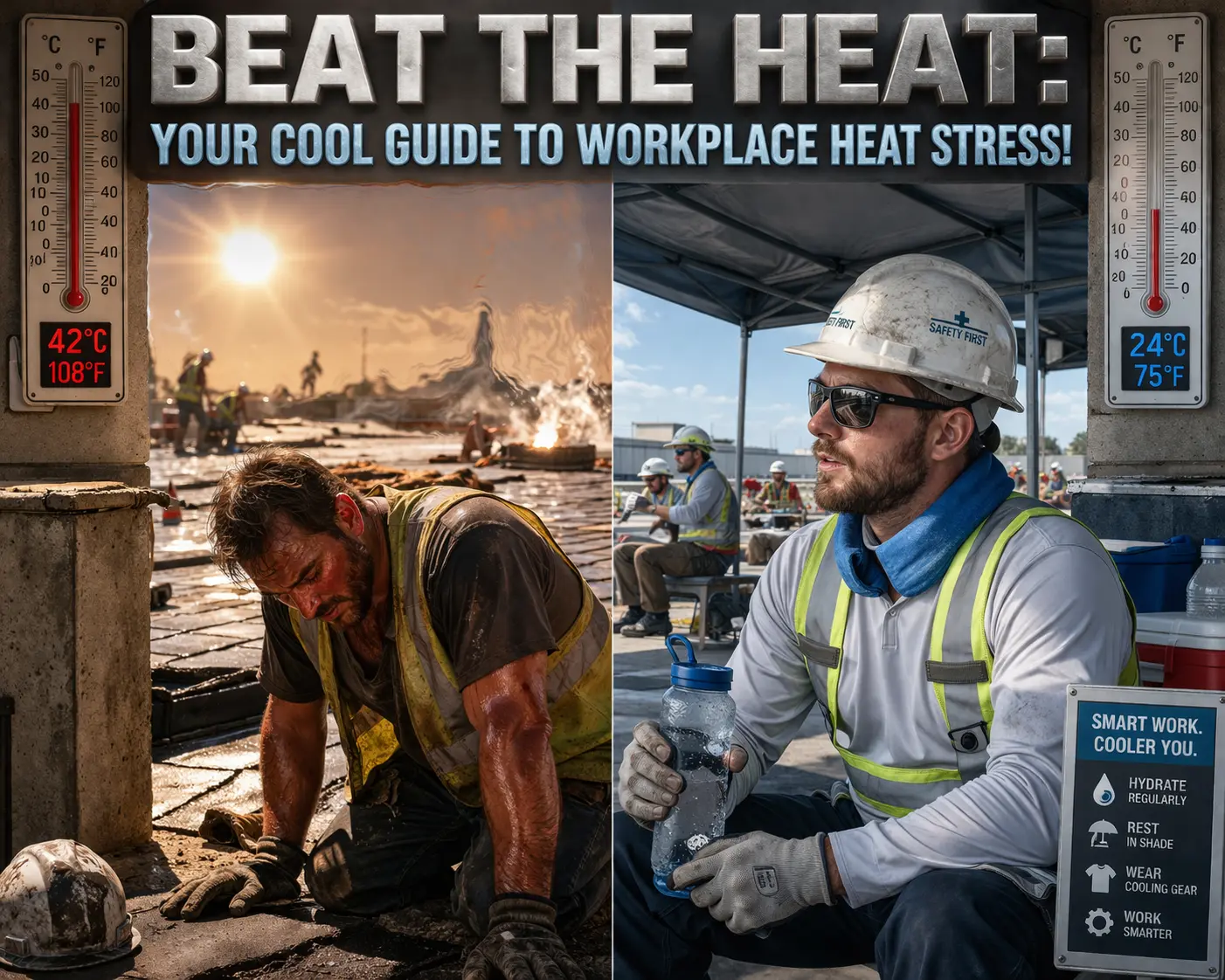 Heat Stress AwarenessFederal thermal stress topic, January 30$24.99
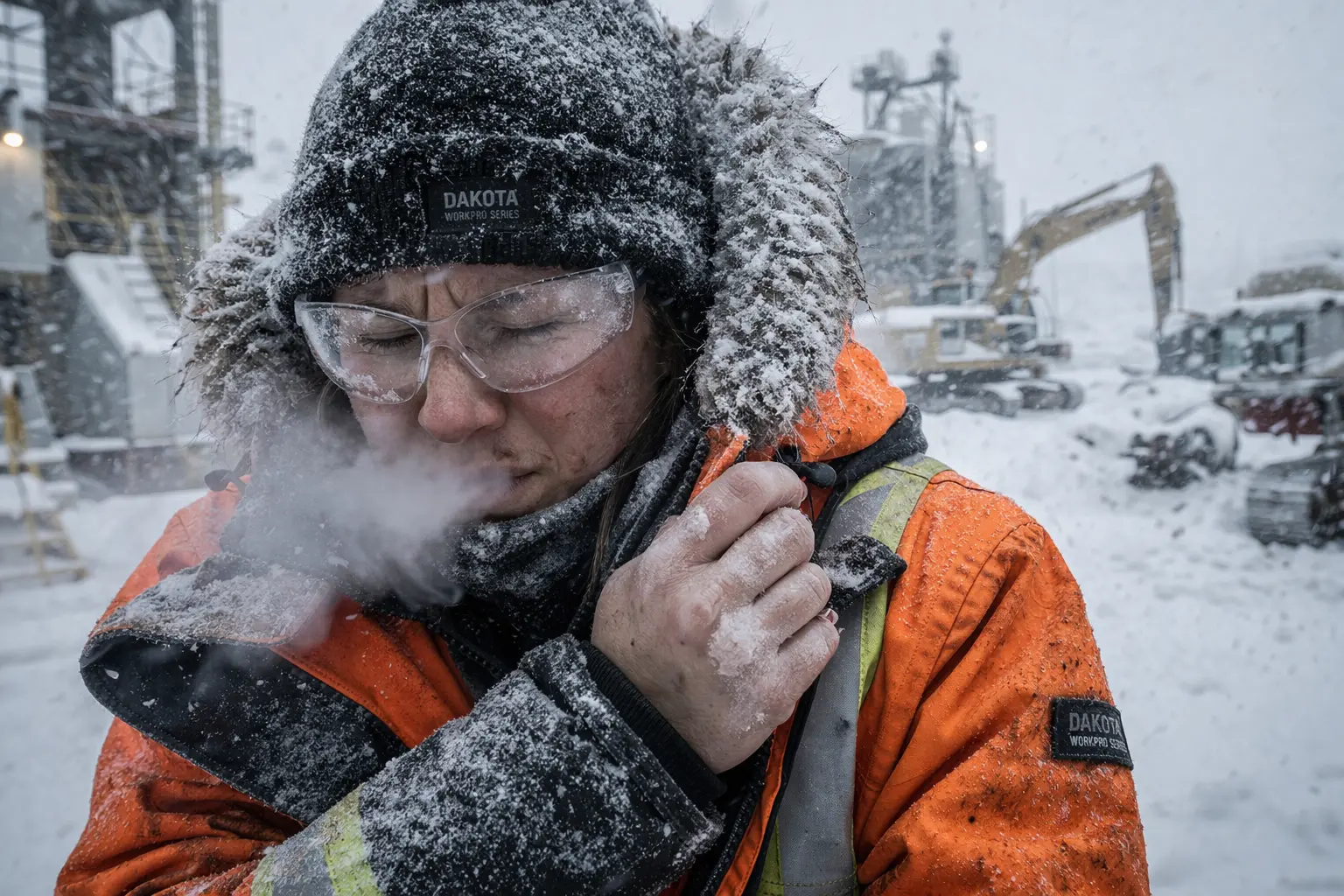 Cold Stress AwarenessFederal thermal stress topic, January 30$24.99
 Indoor Air Quality AwarenessGeneral air quality background, January 30$24.99
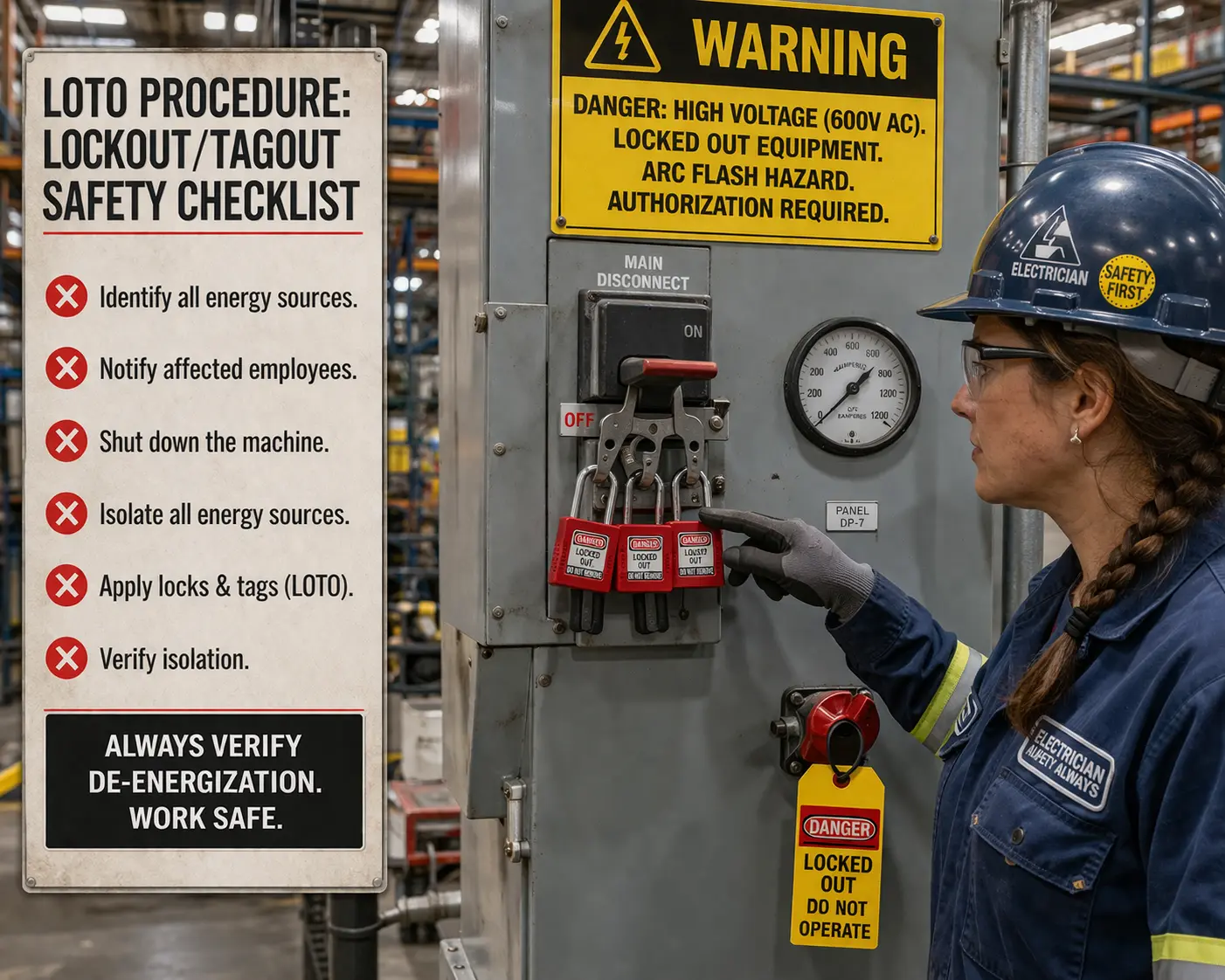 Electrical Safety AwarenessGeneral hazards for non-specialists$34.95
Spring and summer: lifts, committees, asbestos and hard hats
British Columbia: automotive lifts (March 1)
Amended Part 12 rules for automotive lifts and vehicle supports (section 12.74 onward) deal with standards, inspection and records. Parking and storage lifts are excluded.
The heavier schedule applies to a lift that does not meet one of the listed ANSI/ALI ALCTV or EN 1493 standards. To stay in operation, it needs an inspection by a qualified person every four months and one by an Automotive Lift Institute certified lift inspector every 12 months. From March 1, 2030, it also needs certification every three years. Check each lift's standard now.
Quebec establishments: committee training (April 1 and October 1)
These rules cover establishments, not construction sites. Your level is in Schedule I of the regulation, under the 2012 NAICS code for your establishment's primary activity (section 2). Committee members and health and safety representatives designated before each date need their training attestation: level 4 before October 1, 2026 (already passed), level 3 before April 1, 2027, level 2 before October 1, 2027, and level 1 before April 1, 2028. Level 4 includes most manufacturing, hospitals, nursing homes, trucking and warehousing, so check yours now.
- New appointees: 120 days from designation, or the section 39 date if that is later
- Committee members: one day of training (section 31)
- Representative who sits on a committee: the one-day committee training (section 31) plus at least one more day (section 34)
- Representative with no committee: two days (section 35)
- Representatives also: seven hours in each two-year period, starting the April 1 after attestation
The attestation is issued by the CNESST or a body it recognizes. We don't link a course here. The rule is in the Règlement sur les mécanismes de prévention et de participation en établissement (CQLR c. S-2.1, r. 8.3), with section 39 dates amended by Décret 164-2026 (in French).
Manitoba construction: washbasins (April 1)
M.R. 26/2026 targets industrial, commercial and institutional construction sites with more than 25 workers at once that will have a building area over 600 square metres or more than three storeys. On those sites, the section 4.10 exemption (hand sanitizer or other alternatives where washbasins aren't reasonably practicable) no longer applies, so washbasins meeting section 4.9(2), including hot and cold water, are required. Prime contractors are added to the duty in section 4.7.
Manitoba: asbestos certificates (June 1)
Under M.R. 108/2025, asbestos abatement workers, and asbestos inventory workers who sample, need a certificate issued by WCB Manitoba that expires no more than three years after issue (section 37.12(2)(c)). Refresher training applies when the director specifies it. Asbestos businesses register annually (sections 37.15(1) and 37.17).
Our asbestos awareness training is useful background for crews, but it is not that certificate.
Ontario construction: Type 2 head protection (July 1)
O. Reg. 112/26 amends section 22 of O. Reg. 213/91. Where a worker may be exposed to side-impact hazards, Type 2 head protection is required: CSA Z94.1 Type 2, ANSI Z89.1 Type II or equivalent. Where headwear may dislodge, it needs a chin strap or another means of retention.
This is a purchasing job as much as a training one. Assess which tasks carry side-impact exposure, count the hats, and order early. PPE basics awareness covers general principles, so don't rely on it for the new rule.
Ontario: AED reimbursement requests (July 31)
The WSIB reimbursement for construction AEDs pays up to $2,500 for one AED per qualifying construction project. It covers purchases made from July 1, 2025 to June 30, 2027, and requests are due by July 31, 2027. The underlying site rule is explained in our Ontario construction AED requirements article.
What changes from September 2027?
British Columbia's periodic certification amendments take effect September 1. They call for certification by a professional engineer, on a set cycle:
- Vehicle-mounted and self-propelled boom-supported elevating work platforms (section 13.23): every 12 months
- Mobile cranes and boom trucks (section 14.71): every 12 months
- Pile-driving crane booms (section 14.72): every three months or monthly, depending on the method
- Tower cranes, including self-erecting ones (section 14.77.1): at least every 12 months, with the timing of the first certification set out in that section
- Placing booms, masts and truck-mounted concrete pumps (section 20.47): every 12 months
- Fire department aerial devices (section 31.34): every 12 months
Vehicle-mounted and self-propelled boom platforms used only in an orchard, with a maximum operational height of 3.6 metres, may be certified by a qualified person who is not an engineer, except for a recertification required by section 4.12.3(3). Certifications done under the old sections 13.23, 14.71, 14.77, 20.47 and 31.34 count under the new rules (section 4.12.5), but each must still cover the date the equipment is used. The transition section is repealed on September 1, 2028. Book engineering time early.
Operator training and machine certification are separate files, and one can't stand in for the other. An aerial platform operator awareness course certifies neither the person nor the equipment.
Quebec's level 2 attestation deadline follows on October 1.
Operator training and machine certification are separate files, and one can't stand in for the other.
Already in force, with work still to do in 2027
Transportation of dangerous goods transition periods
Two federal TDG amendments are already law. SOR/2026-112 came into force on June 17, 2026, with a transition in section 300. SOR/2026-127 followed on July 1, 2026; its section 115 transition refers to the rules as they read on May 1, 2026.
The old rules may be followed until about June 16 and June 30, 2027 respectively. Read each transition section before relying on those dates. TDG ground awareness is general training. It is not your employer's TDG certificate.
Ontario joint health and safety committee certification
Ontario's JHSC certification program standard is dated July 31, 2026. Under it, an expired certification can be renewed with refresher training. Check your members' status against the standard's conditions.
Alberta and Saskatchewan: nothing dated 2027 found
As of November 27, 2026, we found no OHS change dated 2027 in either province. That is not proof none exists. Watch the Alberta OHS Code review and Saskatchewan's regulation engagement page.
Proposed changes to watch (not law)
Neither of these is in force, so there is no compliance date to plan against yet. Both are still worth a line on your watch list.
Federal noise (proposed). A Canada Gazette, Part I proposal sets out an 85 dBA limit, a hearing loss prevention program and audiometry. As drafted, it would come into force one year after registration. Noise and hearing conservation awareness is a general introduction to the hazard.
Quebec exposure limits and machine safety (draft). A draft published November 11, 2026 (in French) would update the exposure values and notations for air contaminants in Schedule I of the Regulation respecting occupational health and safety, and extend its machine safety sections (172 to 194) to construction sites. For general background, see machine guarding awareness.
Do new standards editions change your obligations?
Not on their own. A standard binds you when a law or a contract references it, and the edition referenced is the one to check.
- NFPA 70E-2027, a US electrical safety standard, took effect May 6, 2026.
- The ISO 45001 revision reached the Draft International Standard ballot in 2026, with voting closed August 9, 2026. The new edition has not been published, so the 2018 edition remains current.
What should you do in the next 30 days?
December is the month to build the list. Start with people and equipment, then match them to dates.
30-day preparation checklist
- List every site by jurisdiction, and mark which operations are federally regulated
- Ontario construction: pull platform training dates by group and type, and book practical training and proficiency checks for the gaps
- British Columbia: identify the dusts you generate or handle, treat each as combustible until you determine otherwise in writing with a qualified person, and name who will assess them
- Federal: put thermal stress procedures on the next committee agenda
- Inventory automotive lifts, cranes and elevating platforms against the British Columbia dates
- Quebec and Manitoba: confirm your Quebec level (level 4 is already due), then name who needs an attestation or certificate, and by when
- Review TDG training records and shipping practices before the June transition ends
- Price and order head protection for tasks with side-impact exposure
- Give each date an owner and a reminder set well ahead of it
Courses for your spring plan and the people running it
General awareness courses. They are not the Manitoba asbestos certificate or Type 2 head protection training, and the supervisor and inspection courses are not tied to a 2027 change.
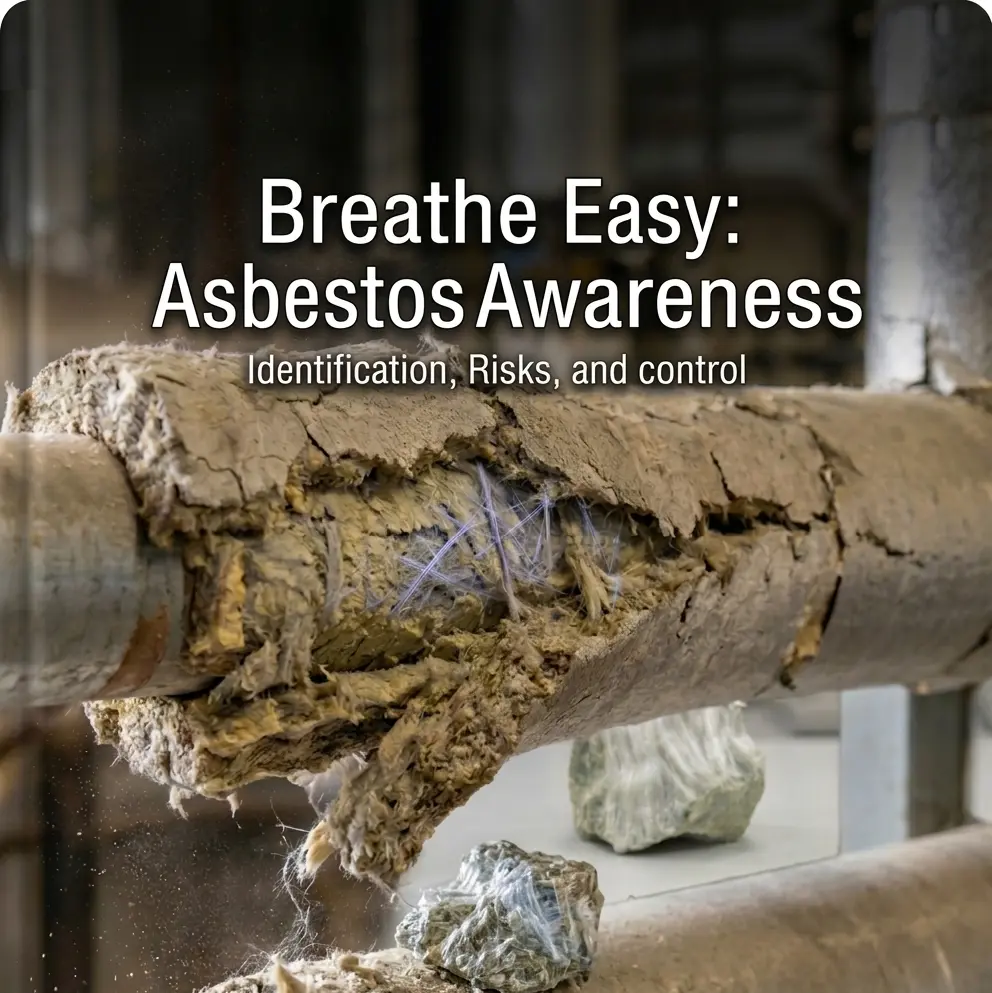 Asbestos Awareness TrainingBackground for crews ahead of June 1$24.99
 PPE Basics AwarenessGeneral protective equipment principles$24.99
 Supervisor Responsibilities and Due DiligenceFor the people carrying out the list$24.99
 Workplace Inspections AwarenessFor the people carrying out the list$24.99
Sources & Regulations
- Ontario: O. Reg. 117/26, Elevating Work Platforms
- Ontario: O. Reg. 116/26, amending O. Reg. 213/91
- WorkSafeBC: combustible dusts decision
- CSA Group: CSA C22.1:27 preorder page
- Canada Gazette, Part II: SOR/2026-10
- WorkSafeBC: Part 12 automotive lift amendments
- LégisQuébec: CQLR c. S-2.1, r. 8.3
- Gazette officielle du Québec: Décret 164-2026 (amending CQLR c. S-2.1, r. 8.3, adopted by Décret 1155-2025)
- Manitoba: M.R. 26/2026
- Manitoba: M.R. 108/2025
- Ontario: O. Reg. 112/26
- WSIB: AED reimbursement
- WorkSafeBC: periodic certification amendments
- Canada Gazette, Part II: SOR/2026-112
- Canada Gazette, Part II: SOR/2026-127
- Ontario: JHSC training program standard
- Alberta: OHS Code review
- Saskatchewan: Occupational Health and Safety Regulations, 2020 engagement
- Canada Gazette, Part I: proposed noise regulations
- Gazette officielle du Québec: November 11, 2026 draft regulation
- NFPA: NFPA 70E
- ISO/TC 283: news and updates