Industrial Safety Consulting Services Across Canada
Comprehensive industrial safety solutions including machine guarding, lockout/tagout, industrial hygiene, ergonomics, chemical safety, and warehouse systems. Ensure CSA compliance and protect your workforce.
Industrial Safety Services Overview
HSE Advisor Canada provides comprehensive industrial safety consulting services across all provinces, helping manufacturing facilities, warehouses, and industrial operations maintain safe work environments while meeting Canadian regulatory requirements.
Our industrial safety team specializes in the full range of hazards found in manufacturing and industrial settings. From machine safeguarding and energy control to occupational hygiene and chemical management, we deliver practical, compliant solutions tailored to your operations.
Whether you operate a food processing plant, automotive facility, warehouse, or general manufacturing site, we understand the unique challenges of industrial environments across Canada and apply proven methodologies to reduce incidents and achieve regulatory compliance.
Machine Guarding and Equipment Safety
Protect workers from machinery hazards with comprehensive machine guarding solutions that meet Canadian safety standards and CSA Z432 requirements.
CSA Machine Safety Standards
Our machine guarding assessments ensure compliance with CSA Z432 "Safeguarding of Machinery" and other relevant Canadian standards. We evaluate all machinery and equipment for proper safeguarding, identifying gaps in protection and recommending appropriate guard solutions.
Machine guarding is critical in preventing the thousands of machinery-related injuries that occur in Canadian workplaces annually. Proper safeguarding not only protects workers but also reduces liability, workers' compensation costs, and production disruptions caused by accidents.
Guard Types and Applications
- Fixed guards for permanent protection
- Interlocked guards with safety switches
- Adjustable guards for varying operations
- Self-adjusting guards for feeding operations
- Presence-sensing devices and light curtains
- Two-hand controls for press operations
Machine Risk Assessment Process
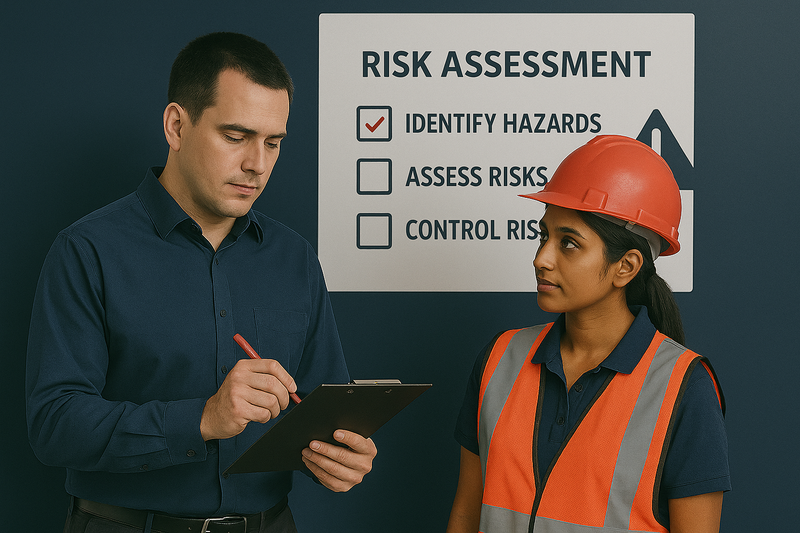
Our systematic approach includes hazard identification, risk evaluation, and guard selection based on CSA Z432 methodology. We assess mechanical hazards including nip points, rotating parts, flying objects, and cutting surfaces, then specify appropriate safeguarding measures.
Machine Guarding Compliance Areas
- Power Transmission: Belt drives, chain drives, gear reducers
- Point of Operation: Press brakes, shears, punch presses
- Rotating Equipment: Lathes, mills, grinders
- Conveyor Systems: Belt, chain, and roller conveyors
- Packaging Equipment: Wrappers, sealers, palletizers
- Food Processing: Mixers, slicers, packaging lines
Safety Circuit Design
We design safety circuits that meet performance level requirements under ISO 13849, ensuring that safety-related control systems provide adequate risk reduction. This includes selection of safety relays, monitoring devices, and emergency stop systems.
Need a Machine Guarding Assessment?
Protect your workers and ensure compliance with Canadian machine safety standards.
Schedule AssessmentLockout/Tagout (LOTO) Program Development
Comprehensive energy control programs to protect workers from hazardous energy during equipment maintenance and servicing operations.
Canadian LOTO Requirements
Lockout/Tagout programs are mandatory under provincial occupational health and safety regulations across Canada. Our LOTO program development ensures compliance with specific provincial requirements while establishing consistent energy control procedures that protect maintenance workers.
Inadequate energy control is a leading cause of maintenance-related fatalities and serious injuries. Effective LOTO procedures prevent unexpected energization, startup, or release of stored energy during maintenance activities.
Energy Sources Assessment
- Electrical energy isolation and verification
- Pneumatic and hydraulic pressure release
- Mechanical stored energy (springs, counterweights)
- Thermal energy and hot surfaces
- Chemical energy and process materials
- Gravitational potential energy
LOTO Procedure Development
We develop equipment-specific LOTO procedures that include step-by-step energy isolation sequences, required lockout devices, verification methods, and restoration procedures. Each procedure is customized for your specific equipment and operations.
LOTO Program Components
- Written Procedures: Equipment-specific isolation steps
- Training Program: Affected and authorized employee training
- Lockout Devices: Locks, tags, and blocking devices
- Group Lockout: Multiple worker protection procedures
- Verification Testing: Energy isolation confirmation methods
- Annual Audits: Procedure effectiveness reviews
Provincial Variations
LOTO requirements vary by province. Ontario's Regulation 851 has specific requirements for electrical work, while Alberta's OHS Code includes detailed energy isolation provisions. We ensure compliance with your provincial regulations.
Industrial Hygiene and Exposure Assessment
Comprehensive workplace exposure assessments and control system implementation to protect workers from chemical, physical, and biological hazards.
Occupational Exposure Limits
Industrial hygiene focuses on anticipating, recognizing, evaluating, and controlling workplace hazards that could affect worker health. Our assessments follow established methodologies to measure exposures and compare results against Canadian occupational exposure limits (OELs).
We conduct comprehensive exposure assessments for chemical vapors, dusts, noise, heat stress, and ergonomic hazards. Our certified industrial hygienists use calibrated equipment to ensure accurate measurements and reliable data for decision-making.
Exposure Assessment Types
- Personal breathing zone sampling
- Area air quality monitoring
- Noise dosimetry and sound level measurements
- Heat stress evaluation (WBGT)
- Illumination and UV radiation assessment
- Biological exposure indicator testing
Control Hierarchy Implementation
Following the hierarchy of controls, we recommend elimination or substitution of hazardous materials when possible, followed by engineering controls, administrative measures, and personal protective equipment as the last line of defense.
Common Industrial Exposures
- Chemical Vapors: Solvents, adhesives, cleaning agents
- Particulates: Dusts, fumes, mists from processes
- Noise Exposure: Machinery, compressed air, impacts
- Heat Stress: Foundries, bakeries, outdoor work
- Ergonomic Hazards: Repetitive motions, heavy lifting
- Biological Agents: Mold, bacteria in HVAC systems
Ventilation System Design
We design local exhaust ventilation systems, dilution ventilation, and containment systems to control airborne contaminants at the source. This includes hood design, duct sizing, and fan selection calculations.
Canadian OEL Standards
We reference Health Canada's Occupational Exposure Limits, ACGIH TLVs, and provincial exposure standards to ensure compliance with the most protective limits applicable to your workplace.
Workplace Ergonomics and Injury Prevention
Systematic ergonomic evaluations and workplace design improvements to reduce musculoskeletal disorders and improve worker comfort and productivity.
Ergonomic Risk Assessment
Musculoskeletal disorders (MSDs) account for a significant portion of workplace injuries in Canada. Our ergonomic assessments identify risk factors including awkward postures, repetitive motions, forceful exertions, contact stress, and vibration exposure that contribute to MSDs.
We use validated assessment tools including RULA, REBA, NIOSH lifting equation, and job-specific analysis methods to quantify ergonomic risks and prioritize improvement opportunities. Our assessments cover manufacturing operations, office environments, and manual material handling tasks.
Ergonomic Risk Factors
- Awkward and sustained postures
- Repetitive hand and arm motions
- Excessive force requirements
- Contact stress from hard surfaces
- Whole-body and hand-arm vibration
- Environmental factors (cold, lighting)
Workplace Design Solutions
Our recommendations focus on engineering solutions that eliminate or reduce exposure to risk factors. This includes workstation design, tool selection, material handling aids, and process modifications that accommodate worker capabilities and limitations.
Ergonomic Improvement Areas
- Workstation Design: Height adjustment, tool placement
- Material Handling: Lift assists, conveyor systems
- Tool Selection: Ergonomic hand tools, power assists
- Job Rotation: Task variety and recovery time
- Training Programs: Safe work practices education
- Early Intervention: Injury prevention programs
Office Ergonomics
We assess computer workstations, seating, keyboard and monitor placement, and lighting to prevent repetitive strain injuries and promote comfort during desk-based work activities.
Ergonomics Program Benefits
- Reduced workers' compensation costs
- Improved worker productivity and quality
- Decreased absenteeism and turnover
- Enhanced employee morale and engagement
Chemical Safety and WHMIS Compliance
Comprehensive chemical management programs including WHMIS compliance, chemical inventory systems, and exposure control plan development.
WHMIS Requirements
The Workplace Hazardous Materials Information System (WHMIS) is Canada's hazard communication standard, aligned with the Globally Harmonized System (GHS). Our chemical safety programs ensure full WHMIS compliance through proper chemical classification, labeling, safety data sheet management, and worker education.
We conduct comprehensive chemical inventories to identify all hazardous products in your workplace, verify GHS-compliant labels and safety data sheets, and develop chemical-specific safe work procedures and emergency response protocols.
WHMIS Program Elements
- Chemical inventory and hazard assessment
- GHS-compliant labels and pictograms
- Safety Data Sheet (SDS) management system
- Worker education and training programs
- Chemical storage and compatibility
- Spill response and emergency procedures
Chemical Storage Design
Proper chemical storage is critical for preventing incompatible reactions, controlling exposures, and enabling effective emergency response. We design storage systems based on chemical compatibility, fire codes, and environmental regulations.
Chemical Hazard Classes
- Physical Hazards: Flammable, explosive, oxidizing
- Health Hazards: Toxic, carcinogenic, sensitizing
- Environmental: Aquatic toxicity, ozone depletion
- Corrosive: Skin and eye damage, metal corrosion
- Compressed Gases: Pressure hazards, asphyxiation
- Reactive: Self-reactive, organic peroxides
Exposure Control Plans
We develop written exposure control plans for designated substances including asbestos, lead, silica, and other regulated chemicals, including medical surveillance and exposure monitoring requirements.
Chemical Documentation
Maintain current safety data sheets, chemical inventories, training records, and exposure monitoring results to demonstrate WHMIS compliance and support workplace safety programs.
Warehouse and Material Handling Safety
Comprehensive warehouse safety programs including forklift operations, storage rack safety, material handling procedures, and dock safety management.
Forklift Safety Programs
Forklift operations present significant risks in warehouse environments, with tip-overs, struck-by incidents, and falls representing the most common accident types. Our forklift safety programs include operator training, equipment inspections, and workplace design considerations to minimize risks.
We develop comprehensive powered industrial truck programs that comply with CSA B335 standards, including operator certification, pre-use inspections, maintenance schedules, and traffic management systems to separate pedestrian and vehicle traffic.
Forklift Program Components
- Operator training and certification
- Daily pre-use inspection procedures
- Load capacity and stability calculations
- Traffic control and pedestrian safety
- Maintenance and repair protocols
- Incident investigation procedures
Storage Rack Safety
We conduct storage rack inspections following CSA A344.1 standards to identify damage, overloading, and improper installation. Our assessments include load calculations, beam deflection measurements, and recommendations for rack protection and repair.
Warehouse Safety Areas
- Material Handling: Lifting, conveyor safety, ergonomics
- Storage Systems: Rack inspections, load limits
- Dock Operations: Loading/unloading procedures
- Traffic Management: Pedestrian/vehicle separation
- Fall Protection: Mezzanine and elevated work
- Emergency Response: Evacuation and first aid
Dock Safety Management
Loading dock operations require specialized safety measures including dock levelers, vehicle restraints, and communication systems to prevent trailer separation during loading operations.
Safety Technology Integration
Modern warehouse safety includes proximity sensors, collision avoidance systems, and automated safety shutoffs to supplement traditional safety programs and provide additional protection layers.
Industrial Safety FAQs
Specialized questions about industrial safety consulting, machine guarding, LOTO programs, and manufacturing compliance requirements in Canada.
What are the key requirements for machine guarding under CSA Z432?
CSA Z432 "Safeguarding of Machinery" requires that all machinery have adequate safeguarding to prevent contact with hazardous moving parts. Key requirements include risk assessment, selection of appropriate safeguarding methods based on risk level, proper installation and maintenance of guards, and training for operators. Guards must be designed to prevent reaching over, under, around, or through the guard to contact hazardous parts. Interlocked guards must prevent machine operation when opened, and presence-sensing devices must stop dangerous motion before contact can occur.
How often should lockout/tagout procedures be reviewed and updated?
LOTO procedures should be reviewed annually as a minimum requirement under most provincial regulations. However, procedures must also be updated whenever equipment modifications occur, new energy sources are added, maintenance procedures change, or incidents reveal procedure inadequacies. We recommend conducting formal procedure audits that include observing actual lockout activities to ensure procedures reflect current equipment configurations and work practices. Any changes to equipment that affect energy isolation must trigger immediate procedure updates.
What are the inspection requirements for warehouse storage racks?
Storage rack inspections should follow CSA A344.1 guidelines with daily visual inspections by warehouse personnel and detailed annual inspections by qualified inspectors. Daily inspections focus on visible damage, overloading, and improper storage practices. Annual inspections include structural assessments, load capacity verification, anchor bolt checks, and plumbness measurements. Immediate inspection is required after any impact damage or seismic events. Damaged racks must be unloaded and repaired before returning to service. Documentation of all inspections and corrective actions is essential for compliance and liability protection.
How does WHMIS differ from previous versions?
WHMIS aligned Canada with the Globally Harmonized System (GHS), introducing significant changes including new pictograms (red diamond-shaped symbols), standardized signal words ("Danger" or "Warning"), and 16-section safety data sheet format. The classification system changed from four classes to two main hazard groups (physical and health hazards) with multiple categories. New hazard classes were added including aspiration hazard and specific target organ toxicity. Supplier labels must now include all required GHS elements, and workplace labels have specific content requirements. Training must cover the new GHS elements and updated hazard communication requirements.
Need More Information?
Find answers to general HSE consulting questions, training requirements, ergonomic assessments, and location-specific services.
View All FAQs Compliance FAQsFree Lift Planning Worksheet
Record load and equipment data, rigging, exclusion zones, signals and the pre-lift briefing.
Ready to Enhance Your Industrial Safety Program?
Partner with HSE Advisor Canada to develop comprehensive industrial safety management systems that protect your workforce, ensure regulatory compliance, and drive operational excellence. Our certified safety professionals are ready to help.