Construction Safety Management in Canada
Complete Guide to COR Certification, IHSA Compliance, and Site Safety Excellence
Construction Safety Management Excellence
The construction industry in Canada faces unique safety challenges that require specialized expertise, regulatory compliance, and proven safety management systems. With construction accidents accounting for a significant portion of workplace injuries and fatalities, implementing comprehensive safety programs is not just a legal requirement—it's essential for protecting your workers, your business, and your reputation.
HSE Advisor Canada specializes in construction safety management, providing end-to-end solutions that help construction companies across Canada achieve safety excellence while maintaining operational efficiency. Our comprehensive approach covers everything from initial risk assessments and safety program development to ongoing compliance management and worker training.
Whether you're a general contractor managing complex multi-trade projects, a specialty contractor focusing on specific trades, or a construction company seeking COR certification, our team of construction safety experts has the knowledge and experience to help you build a world-class safety program that protects your workers and drives business success.
COR Certification for Construction Companies
The Certificate of Recognition (COR) is the gold standard for safety management systems in Canada, demonstrating your company's commitment to worker safety and regulatory compliance.
Understanding the COR Process
The COR certification process for construction companies is comprehensive and typically requires 12-18 months to complete. This timeline includes developing your safety management system, implementing policies and procedures, training your team, conducting internal audits, and successfully passing the external audit with a minimum score of 80%.
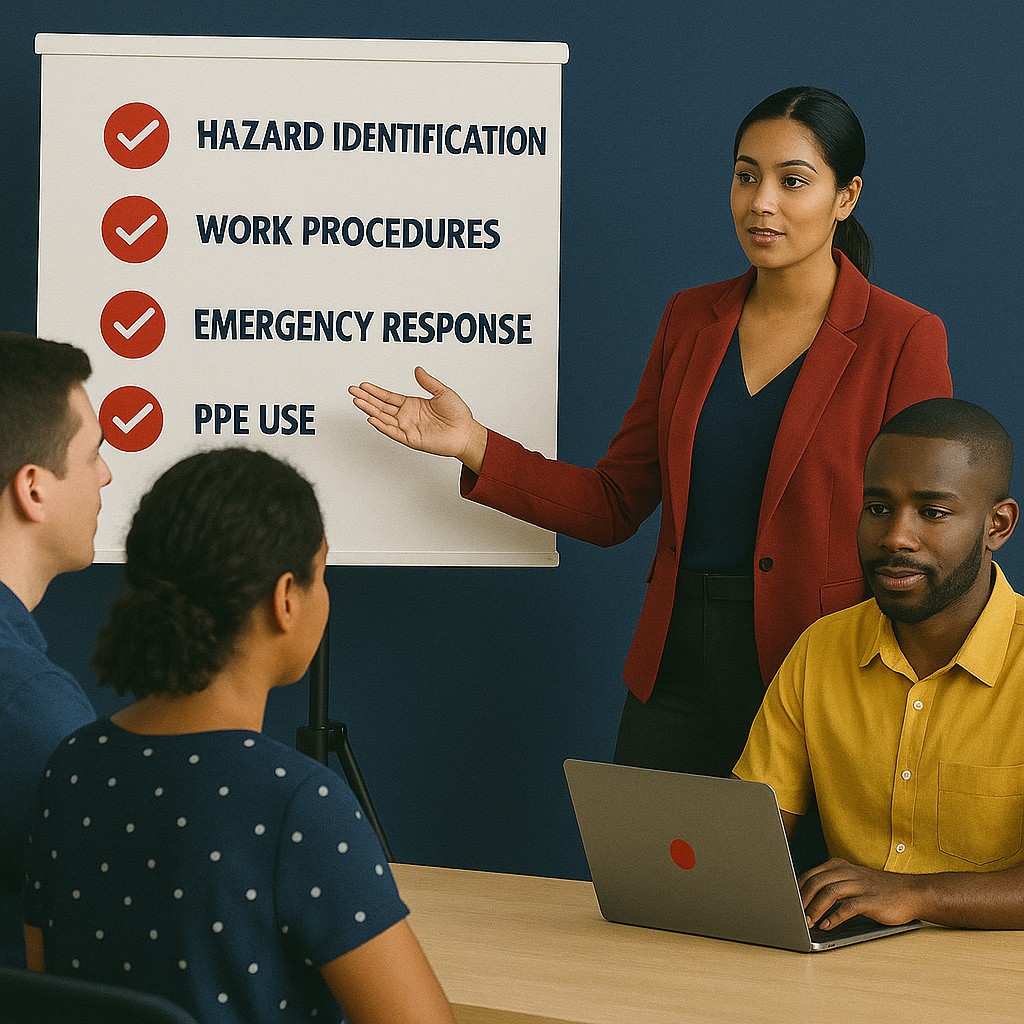
Construction companies pursuing COR certification must demonstrate competency in 20 key elements, including management leadership, hazard assessment and control, safety meetings, training and communication, incident investigation, emergency preparedness, and program administration. Each element must be fully implemented and documented before the external audit can take place.
Step-by-Step COR Implementation
- Gap Analysis and Planning (Month 1-2): We conduct a comprehensive assessment of your current safety program against COR requirements, identifying gaps and creating a detailed implementation roadmap.
- Policy and Procedure Development (Month 2-6): Development of comprehensive safety policies, procedures, and forms tailored to your construction operations and specific trade requirements.
- Training and Implementation (Month 6-10): Delivery of management and worker training, implementation of new procedures, and establishment of safety committees and communication systems.
- Documentation and Record Keeping (Month 8-12): Creation of documentation systems, training records, inspection logs, and incident tracking systems to demonstrate program effectiveness.
- Internal Auditing (Month 10-14): Training of internal auditors and conducting internal audits to identify areas for improvement before the external audit.
- External Audit Preparation (Month 14-16): Final preparation including mock audits, documentation review, and worker interviews to ensure readiness for the certifying partner audit.
- External Audit and Certification (Month 16-18): The certifying partner conducts the external audit, and upon successful completion with 80% or higher, COR certification is awarded.
IHSA Partnership Requirements
In Ontario, construction companies must work with the Infrastructure Health & Safety Association (IHSA) as their certifying partner for COR certification. IHSA provides auditing services, training programs, and ongoing support throughout the certification process and maintenance period.
IHSA partnership requirements include maintaining active membership, participating in industry safety initiatives, and demonstrating commitment to continuous improvement in safety performance. Companies must also ensure their safety management system aligns with IHSA's construction-specific requirements and best practices.
COR Certification Investment
Tiered to your scope: $2,500 – $20,000
- COR Readiness Assessment (gap analysis + priority action plan): $2,500 – $3,500
- COR Foundation Package (program documentation + training coordination): $7,500 – $12,000
- COR Full Support (adds audit preparation + internal audit support): $14,000 – $20,000
- COR annual maintenance retainer: $2,400 – $4,800/yr
Packages include consulting services, training development, documentation, and audit preparation. ROI typically achieved within 12 months through reduced insurance premiums, improved tender competitiveness, and reduced incident costs.
Success Rate and Benefits
HSE Advisor Canada maintains a 95% first-attempt COR certification success rate for construction companies. This exceptional success rate is achieved through our comprehensive preparation approach, experienced auditor knowledge, and thorough understanding of IHSA requirements.
COR-certified construction companies typically experience immediate benefits including WCB premium reductions of 5-10%, improved tender competitiveness, enhanced client confidence, reduced incident rates, and improved worker engagement in safety programs.
IHSA Requirements and Compliance
Ontario construction companies must comply with specific IHSA training and certification requirements to ensure worker safety and regulatory compliance.
Working at Heights Certification
All workers exposed to fall hazards at heights of 3 meters or more must complete Working at Heights training and certification. This includes classroom instruction on fall protection systems, hazard recognition, and rescue procedures, followed by hands-on practical evaluation.
Validity: 3 years
Refresher: Required before expiry
Cost: $150-250 per worker
Health & Safety Awareness
Mandatory training for all construction workers covering hazard recognition, workers' rights and responsibilities, WHMIS, personal protective equipment, and emergency procedures. Must be completed before workers can enter construction sites.
Validity: 3 years
Format: Online or classroom
Duration: 6 hours
Supervisor Training
Construction supervisors must complete specialized training covering leadership responsibilities, hazard assessment, incident investigation, enforcement procedures, and legal obligations under the Occupational Health and Safety Act.
Validity: 3 years
Prerequisite: H&S Awareness
Duration: 16 hours
Construction Training Requirements by Role
| Role | H&S Awareness | Working at Heights | Supervisor Training | Trade-Specific | Additional Requirements |
|---|---|---|---|---|---|
| General Laborer | Required | If exposed | — | — | Site orientation |
| Skilled Tradesperson | Required | If exposed | — | Required | Trade certification |
| Foreman/Supervisor | Required | If exposed | Required | If applicable | Leadership training |
| Site Superintendent | Required | Required | Required | — | Emergency response |
| Project Manager | Required | — | Required | — | Due diligence training |
Penalty Avoidance Strategies
Common IHSA Violations
- Inadequate Fall Protection: Fines ranging from $10,000 to $500,000
- Insufficient Training Documentation: Fines from $5,000 to $100,000
- Poor Hazard Assessment: Fines from $15,000 to $250,000
- Inadequate Supervision: Fines from $25,000 to $750,000
- Missing Safety Programs: Fines from $20,000 to $500,000
Prevention Best Practices
- Maintain current training certificates for all workers
- Implement robust record-keeping systems
- Conduct regular internal safety audits
- Ensure supervisor competency and presence
- Develop site-specific safety plans
- Implement effective communication systems
- Regular equipment inspections and maintenance
Construction Safety FAQs
Specialized questions about construction safety management in Canada.
What are IHSA requirements for Ontario construction sites?
IHSA requirements include working at heights certification, health and safety awareness training, supervisor training, and specific trade training. All workers must complete mandatory training before starting work, with refresher training required every three years. Additionally, sites must have competent supervisors, proper fall protection systems, and comprehensive safety programs.
What should be included in site-specific safety planning?
Site-specific safety plans must include hazard identification and risk assessment, control measures, emergency procedures, communication protocols, training requirements, inspection schedules, and subcontractor coordination procedures. The plan should address site-specific conditions, work phases, and unique hazards not covered in general safety programs.
What are the penalties for construction safety violations in Canada?
Penalties vary by province but can range from $5,000 to $1.5 million depending on the violation severity and consequences. Common violations include inadequate fall protection ($10,000-$500,000), insufficient training documentation ($5,000-$100,000), and poor hazard assessment ($15,000-$250,000). Beyond financial penalties, violations can result in work stoppages, project delays, and criminal charges in severe cases.
How do construction safety requirements differ between provinces?
While federal safety standards provide a foundation, each province has specific requirements for training, certification, and safety program elements. Ontario requires IHSA training, Alberta mandates specific fall protection standards, BC has unique WorkSafeBC requirements, and Quebec operates under different regulatory frameworks. Companies operating across provinces need programs that address all applicable requirements.
Need More Information?
Find answers to general HSE consulting questions, training requirements, COR certification, pricing, and location-specific services.
View All FAQs Industry-Specific FAQsFree Fall Protection Program Template
A written program and per-site plan covering height triggers, anchorage, equipment inspection, training records and rescue.
Ready to Transform Your Construction Safety Program?
Partner with HSE Advisor Canada to develop a comprehensive construction safety management system that protects your workers, reduces incidents, and drives business success. Our proven approach has helped over 500 construction companies achieve safety excellence and COR certification.